


Growing Concerns Over Voting Rights in South Carolina
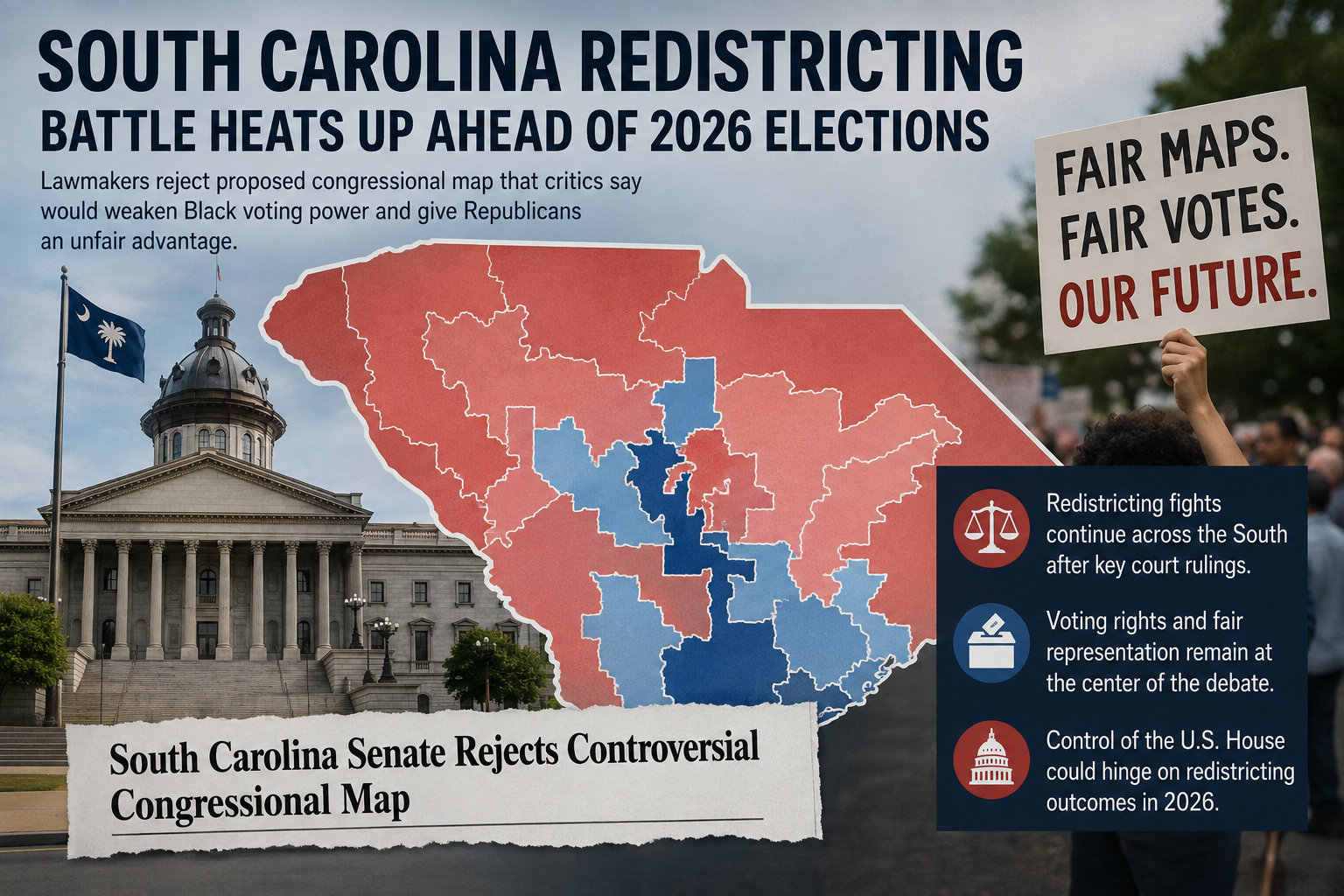
A heated political battle is unfolding in South Carolina after lawmakers rejected a controversial congressional redistricting proposal that could reshape voting power before the 2026 U.S. elections. The decision has triggered nationwide discussions about fair representation, voting rights, and political influence across America.
The proposed South Carolina congressional map faced strong criticism from voting rights groups and political analysts who argued that the changes could weaken Black voting power while strengthening Republican control in several districts. The issue quickly became one of the most talked-about political stories in the United States this week.
The rejected redistricting plan reportedly targeted areas connected to influential Democratic leaders, including longtime Congressman James Clyburn. Critics claimed the proposal could reduce minority representation and create unfair political advantages ahead of the highly anticipated 2026 elections.
Supporters of the map argued that the changes reflected population growth and updated district boundaries. However, opposition lawmakers and civil rights organizations warned that the proposal raised serious concerns about gerrymandering and equal representation.
The South Carolina Senate eventually voted against advancing the map after bipartisan concerns emerged over fairness, legal challenges, and public backlash. Political experts believe this outcome could influence future redistricting efforts across Southern states.
The controversy comes at a time when voting rights and congressional district maps are becoming major political issues nationwide. Several states, including Alabama and Florida, are also facing legal and political disputes over how electoral boundaries are drawn.
Analysts say control of the U.S. House of Representatives in 2026 could depend on a small number of contested districts, making every redistricting battle extremely important for both Democrats and Republicans.
Voting rights advocates praised the rejection of the proposed map, calling it a victory for democracy and fair representation. Meanwhile, conservative leaders indicated they may continue pushing for revised district maps in future legislative sessions.
As America moves closer to the 2026 election cycle, the debate surrounding South Carolina redistricting is expected to remain a key political topic. The fight over congressional maps, minority representation, and election fairness will likely shape the future of U.S. politics in the coming years.
Reference & Source
This article is based on reporting and information published by The New York Times along with additional public political coverage and election updates. Readers can visit the original report for further details and ongoing developments regarding the South Carolina redistricting debate.
