Manchester United Face Early-Season Pressure After Historic Old Trafford Collapse
Manchester United entered the new season hoping that a fresh campaign would bring stability, momentum and a clearer path back towards the top of English football.
Only a few weeks later, the pressure is already building.
United were eliminated from the League Cup after suffering a remarkable 3–2 home defeat to Brighton & Hove Albion despite leading 2–0.
It was the first time in 50 years that Manchester United had lost at Old Trafford after establishing a two-goal lead.
The result would have been painful in isolation.
Combined with United's Premier League start, it becomes considerably more significant.
United Had the Start They Wanted
The night initially looked promising.
Teenager Shea Lacey scored after eight minutes, before Mason Mount doubled United's advantage only two minutes later.
At 2–0, United appeared to have control.
Brighton changed the game.
Charalampos Kostoulas scored in first-half stoppage time, cutting United's advantage before the interval.
Pascal Gross equalised in the 65th minute.
Only four minutes later, Maxim De Cuyper completed the turnaround.
Brighton had transformed a 2–0 deficit into a 3–2 lead.
United never recovered.
Old Trafford Had Not Seen This for Half a Century
The manner of the defeat made it historically unusual.
According to Reuters, the previous occasion Manchester United lost at Old Trafford after leading by two goals came in September 1976, when Tottenham Hotspur also recovered to win 3–2.
Football statistics do not determine what happens next.
But records like this explain why the Brighton defeat attracted so much attention.
For a club attempting to rebuild confidence, surrendering a two-goal home lead creates exactly the kind of narrative it wants to avoid.
Carrick Accepted Responsibility
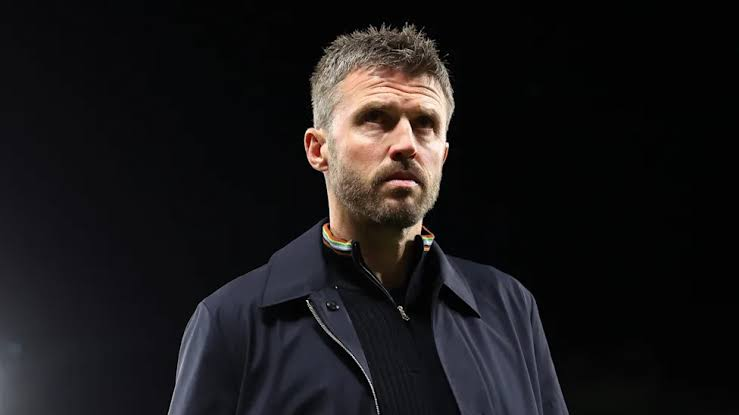
Manager Michael Carrick did not attempt to distance himself from the performance.
After the defeat, he said the team could not accept the way the match had unfolded and took responsibility for United's second-half performance.
His response matters because the challenge now is psychological as much as tactical.
United have to prevent one bad result becoming several.
That is particularly important at the beginning of a season, when teams are still establishing confidence and expectations.
The Premier League Start Has Not Helped
United's league results have also been disappointing.
After four Premier League matches, Carrick's side have managed only one victory, against promoted Ipswich Town.
They sit 13th in the table.
United also entered the Brighton game following a 1–0 league defeat against Manchester City.
That puts Sunday's trip to Fulham under greater scrutiny.
A win would immediately ease some of the pressure.
Another setback would make United's difficult opening increasingly hard to dismiss as a temporary problem.
Fulham Have Problems of Their Own
United are not travelling to face a team in perfect form.
Fulham are also searching for their first Premier League victory of the campaign under new manager Alvaro Arbeloa.
There have nevertheless been encouraging signs.
Fulham drew with Liverpool and then defeated West Ham United in the League Cup in midweek.
That makes Sunday's match particularly interesting.
Both sides need momentum.
History Favours United at Craven Cottage
Manchester United have not lost away to Fulham since 2009.
That record provides some encouragement.
But historical records matter only until the next match begins.
Fulham will know United arrive under pressure, while the home crowd will recognise an opportunity to make that pressure considerably worse.
Expectations at Manchester United Are Different
Many football clubs can tolerate a transitional season.
Manchester United rarely receive that luxury.
The club's history creates expectations that extend beyond the current squad or manager.
United supporters remember teams competing regularly for Premier League titles and Champions League trophies.
Modern United have struggled to reproduce that consistency.
Every new rebuild therefore carries the weight of previous unsuccessful ones.
Early Optimism Can Disappear Quickly
Pre-season optimism is common in football.
New players arrive.
Managers have time on the training ground.
Supporters imagine what could happen.
Then competitive matches begin.
Weaknesses become visible.
Opponents exploit them.
Results create pressure.
Reuters noted that one month into the Premier League campaign, explanations about new squads requiring time to settle are already becoming less convincing for some of England's struggling major clubs.
United are not alone.
Several Big Clubs Have Started Slowly
Liverpool remain unbeaten under Andoni Iraola but have drawn three of their first four Premier League matches.
Chelsea's strong opening has been interrupted by defeat to Arsenal and a home draw with promoted Hull City.
Tottenham's situation is even more striking.
After spending more than £300 million during the summer, Spurs have opened their league campaign without a victory — or even a goal — in their first four matches.
The early Premier League table therefore contains several surprises.
Arsenal and Manchester City Have Done the Opposite
While some traditional powers struggle, Arsenal and Manchester City have started perfectly.
Both clubs have won each of their opening four Premier League matches.
That creates another problem for teams trying to catch them.
Dropping points early may not feel disastrous during a long season.
But when leading rivals are collecting maximum points, the gap can grow quickly.
United Need Stability More Than Drama
Manchester United have rarely lacked headlines.
What the club has lacked in recent years is sustained consistency.
A strong performance is followed by a poor one.
A promising run ends unexpectedly.
A new manager generates optimism before familiar problems return.
The objective for Carrick is therefore larger than winning one match at Fulham.
United need to establish a pattern.
Defensive Control Is Crucial
The Brighton defeat illustrates the problem clearly.
Scoring twice in the opening ten minutes should create a platform.
A strong team then manages the match.
It decides when to attack.
It slows the opponent's momentum.
It protects dangerous areas.
It forces the trailing side to take increasingly desperate risks.
United instead allowed Brighton back into the contest.
Once the momentum changed, they could not regain control.
Young Players Bring Opportunity and Pressure
Shea Lacey's early goal was one positive from the evening.
Young players have always carried particular significance at Manchester United.
The club's academy tradition is part of its identity.
Giving talented young footballers opportunities can energise supporters and provide a pathway that expensive transfers cannot replicate.
But young players also need a stable senior structure around them.
They should not be expected to solve wider team problems.
Money Alone Does Not Build a Team
Tottenham's difficult opening provides another reminder of this.
Spending hundreds of millions of pounds can improve a squad.
It cannot guarantee cohesion.
Modern football recruitment involves more than purchasing talented individuals.
Players need complementary roles.
The tactical system has to suit them.
Managers need time to build automatisms.
Recruitment departments need to think several transfer windows ahead.
Manchester United have learned repeatedly how expensive it can be when those pieces do not align.
The Manager Is Always the Focus
When results deteriorate, attention inevitably moves towards the manager.
Carrick knows this.
He also knows that football narratives can change extremely quickly.
A convincing victory at Fulham followed by another positive result would alter the atmosphere.
A defeat could do the opposite.
That volatility is one reason managing a major football club is so demanding.
The International Break Adds Urgency
The timing of Sunday's game matters too.
An international break follows.
Going into that pause after a victory would give Carrick breathing room.
Going into it after another disappointing result would leave days of scrutiny without another match available to change the conversation.
That makes Fulham feel more significant than an ordinary early-season fixture.
Supporters Want Evidence of Progress
Fans understand that rebuilding takes time.
What they want to see is evidence that the team is moving somewhere.
Better organisation.
More consistent performances.
Young players developing.
New signings integrating.
Fewer repeated mistakes.
A rebuild becomes difficult to defend when supporters cannot identify what has actually improved.
United's Name Still Magnifies Everything
Manchester United remain one of world football's most recognisable clubs.
That ensures enormous attention regardless of league position.
A routine defeat for another club can become an international story when it happens to United.
That attention creates commercial power.
It also creates pressure.
Players and managers operate knowing that every poor performance will be analysed globally.
The Season Is Still Young
Four league matches do not define an entire campaign.
There is plenty of time for United to improve.
Players can find form.
Tactical changes can work.
Confidence can return quickly.
Football history is filled with teams that started slowly and finished strongly.
The current situation should therefore not be confused with a verdict on United's entire season.
But early matches still matter.
Points lost in September cannot be recovered in May.
Fulham Now Becomes the Immediate Test
Carrick's message after Brighton was straightforward: United have to turn the situation around and start winning matches again.
Sunday gives them that opportunity.
United travel to a ground where they have not lost since 2009.
They face a Fulham team that has yet to win in the league.
On paper, there are reasons for confidence.
Football is rarely played on paper.
After surrendering a two-goal lead at Old Trafford for the first time in half a century, Manchester United need something more valuable than explanations.
They need a response.