


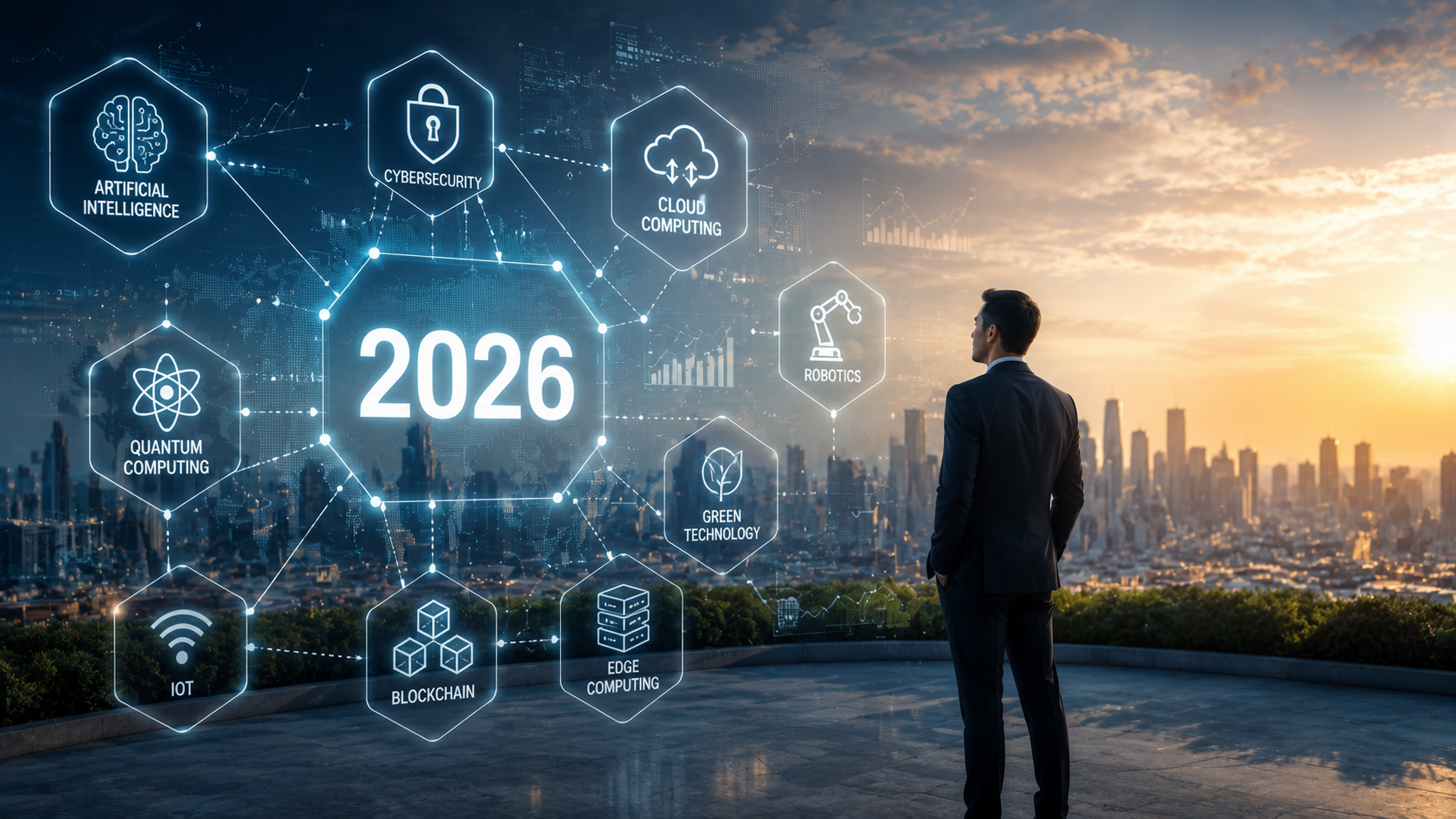
Explore the top emerging technology trends businesses should watch in 2026, including AI, automation, cybersecurity, cloud computing, and sustainable innovation.
Emerging Technologies Businesses Should Watch in 2026
Technology continues to reshape the way businesses operate, compete, and serve their customers. Every year brings new innovations that improve efficiency, reduce costs, and create opportunities for growth. In 2026, companies that understand and adopt the right emerging technology solutions will be better positioned to stay competitive in an increasingly digital marketplace.
Emerging technologies are no longer limited to large corporations with significant budgets. Advances in cloud computing, artificial intelligence, automation, and data analytics have made powerful tools more accessible to businesses of all sizes. By staying informed about these developments, organisations can make strategic investments that support long-term success.
Why Emerging Technology Matters
Businesses face constant pressure to improve productivity, respond to customer expectations, and adapt to changing market conditions. Emerging technologies provide innovative solutions that help organisations achieve these goals while creating new business opportunities.
Adopting the right technologies can help businesses:
- Improve operational efficiency
- Enhance customer experiences
- Reduce operating costs
- Increase productivity
- Strengthen cybersecurity
- Support better decision-making
- Encourage innovation
- Build long-term competitiveness
Rather than adopting every new trend, businesses should focus on technologies that align with their strategic objectives.
1. Artificial Intelligence and Machine Learning
Artificial intelligence remains one of the most influential emerging technology trends in 2026. Businesses are using AI to automate repetitive tasks, analyse large datasets, and provide valuable insights that improve decision-making.
Common business applications include:
- Customer service chatbots
- Predictive analytics
- Marketing personalisation
- Sales forecasting
- Fraud detection
- Process automation
Machine learning systems continue to improve over time by learning from historical data, making them valuable tools across multiple industries.
2. Intelligent Automation
Automation is evolving beyond simple repetitive tasks. Intelligent automation combines artificial intelligence, machine learning, and robotic process automation to streamline complex business operations.
Businesses are investing in automation for:
- Invoice processing
- Customer onboarding
- Workflow management
- Inventory control
- Human resources
- Financial reporting
These solutions allow employees to focus on strategic and creative work rather than manual administrative tasks.
3. Advanced Cybersecurity Technologies
As digital operations expand, cybersecurity has become one of the highest priorities for modern organisations.
Emerging cybersecurity technologies include:
- AI-powered threat detection
- Behavioural analytics
- Zero Trust security frameworks
- Advanced identity verification
- Cloud security platforms
- Automated incident response
Investing in modern cybersecurity solutions helps businesses protect sensitive information and maintain customer confidence.
4. Cloud Computing and Hybrid Infrastructure
Cloud technology continues to evolve, providing businesses with greater flexibility and scalability.
In 2026, many organisations are adopting hybrid cloud environments that combine public cloud services with private infrastructure.
Benefits include:
- Lower infrastructure costs
- Improved collaboration
- Remote accessibility
- Enhanced disaster recovery
- Greater scalability
- Faster software deployment
Cloud-based systems also support business continuity during unexpected disruptions.
5. Internet of Things (IoT)
The Internet of Things connects physical devices through the internet, allowing businesses to collect and analyse real-time data.
Common business uses include:
- Smart manufacturing
- Fleet management
- Asset tracking
- Predictive maintenance
- Energy monitoring
- Inventory management
IoT technology improves operational visibility and helps organisations make more informed decisions.
6. Edge Computing
As businesses generate larger volumes of data, edge computing is becoming increasingly important.
Instead of sending all information to central cloud servers, edge computing processes data closer to where it is created.
Advantages include:
- Faster processing speeds
- Lower latency
- Reduced bandwidth usage
- Improved reliability
- Enhanced security
Industries such as manufacturing, healthcare, logistics, and retail are increasingly adopting edge computing solutions.
7. Data Analytics and Business Intelligence
Data continues to be one of the most valuable business assets.
Modern analytics platforms help organisations:
- Understand customer behaviour
- Monitor business performance
- Identify market trends
- Improve forecasting
- Support strategic planning
- Measure operational efficiency
Businesses that make data-driven decisions often outperform competitors that rely solely on intuition.
8. Sustainable Technology
Environmental responsibility is becoming a major business priority.
Emerging sustainable technologies include:
- Energy-efficient data centres
- Renewable energy solutions
- Smart building management
- Carbon monitoring systems
- Sustainable supply chain software
These technologies help organisations reduce environmental impact while improving operational efficiency and meeting regulatory expectations.
9. Digital Collaboration Tools
Hybrid and remote working models continue to shape business operations in 2026.
Companies are investing in collaboration technologies such as:
- Cloud-based communication platforms
- Project management software
- Virtual meeting solutions
- Digital document management
- Team productivity applications
Effective collaboration tools improve communication and support flexible working environments.
10. Extended Reality (XR)
Extended Reality, which includes virtual reality (VR), augmented reality (AR), and mixed reality (MR), is expanding beyond entertainment into practical business applications.
Businesses are using XR for:
- Employee training
- Product demonstrations
- Virtual design reviews
- Customer engagement
- Remote technical support
As hardware becomes more affordable, adoption is expected to increase across multiple industries.
How Businesses Should Evaluate New Technologies
Not every emerging technology will be suitable for every organisation.
Before making technology investments, businesses should consider:
- Business objectives
- Return on investment
- Customer needs
- Integration with existing systems
- Employee training requirements
- Security considerations
- Long-term scalability
Careful evaluation ensures technology investments deliver measurable business value.
Building a Future-Ready Business
Businesses that successfully adopt emerging technologies often share several characteristics:
- A willingness to innovate
- Strong leadership support
- Continuous employee learning
- Data-driven decision-making
- Customer-focused strategies
- Flexible business models
Creating a culture that embraces change enables organisations to respond more effectively to future technological developments.
The Future of Emerging Technology
Technology will continue to evolve at an accelerated pace beyond 2026. Artificial intelligence, automation, cloud computing, advanced cybersecurity, and intelligent data analytics are expected to become even more integrated into everyday business operations.
Companies that remain informed, invest strategically, and continuously evaluate new technologies will be better positioned to adapt to changing markets and seize new opportunities.
Conclusion
Understanding emerging technology trends is essential for businesses that want to remain competitive in 2026 and beyond. From artificial intelligence and intelligent automation to cybersecurity, cloud computing, IoT, and sustainable innovation, modern technologies are transforming how organisations operate and deliver value.
Rather than adopting technology for its own sake, businesses should focus on solutions that support their strategic goals, improve efficiency, and enhance customer experiences. By embracing the right emerging technologies today, organisations can build a stronger foundation for innovation, resilience, and long-term business success.
