


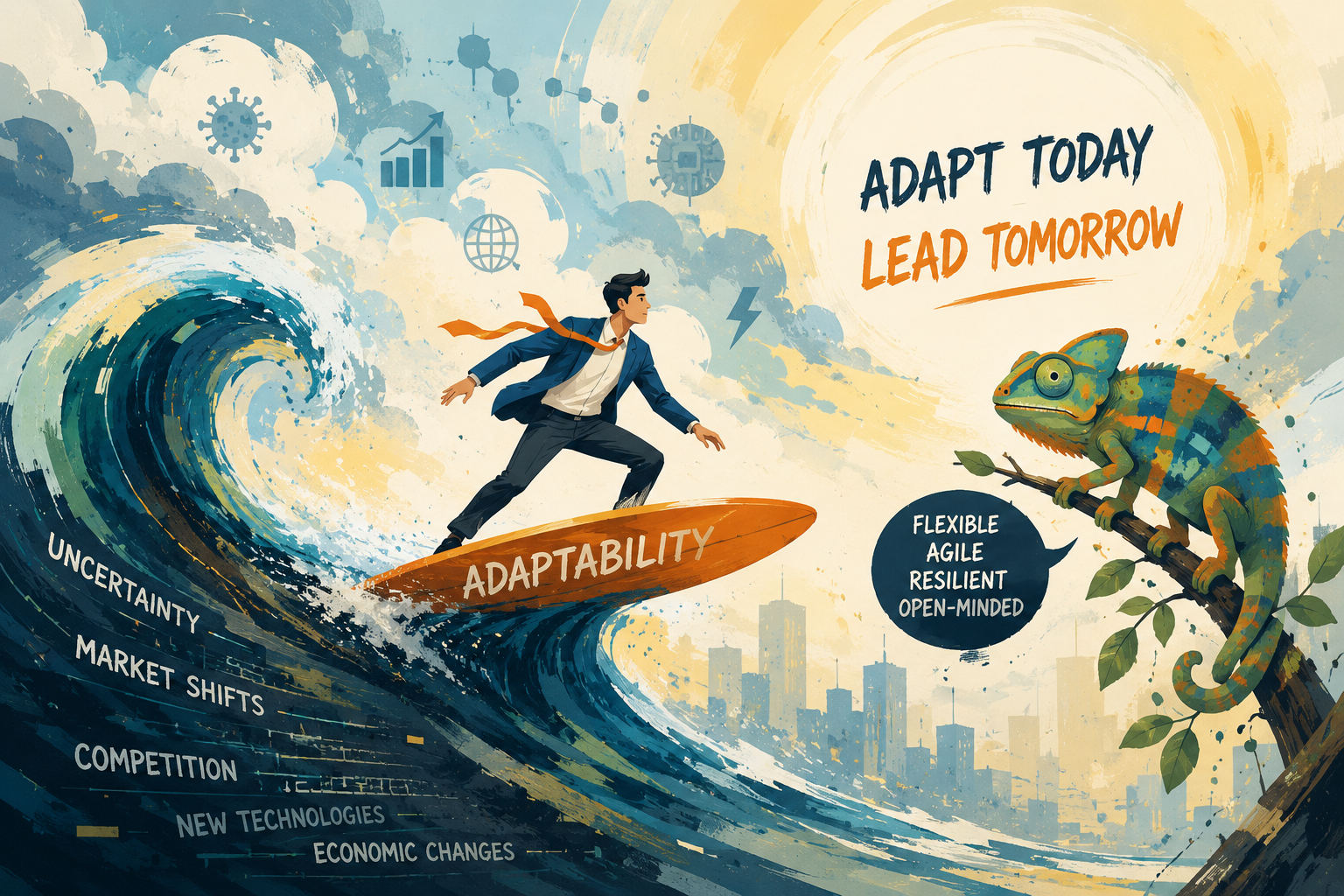
Learn why adaptability is vital for entrepreneur success and discover how embracing change, innovation, and resilience helps businesses thrive in competitive markets.
Why Adaptability Is Essential for Entrepreneurs
The business world is constantly evolving. New technologies, changing customer expectations, economic shifts, and global events can reshape industries almost overnight. For entrepreneurs, the ability to adapt is no longer just an advantage—it is a necessity. One of the biggest factors behind entrepreneur success is the willingness to embrace change, learn from challenges, and adjust strategies when circumstances demand it.
While a strong business idea provides a solid foundation, long-term success depends on how well entrepreneurs respond to unexpected situations. Those who remain flexible are better equipped to overcome obstacles, identify new opportunities, and build businesses that continue to grow despite uncertainty.
What Does Adaptability Mean in Business?
Adaptability is the ability to adjust to changing conditions while maintaining focus on long-term goals. It involves recognising when a current approach is no longer effective and being willing to explore better alternatives.
For entrepreneurs, adaptability may involve:
- Updating business strategies
- Learning new technologies
- Responding to customer feedback
- Entering new markets
- Improving products or services
- Adjusting pricing models
- Embracing digital transformation
Rather than resisting change, adaptable entrepreneurs use it as an opportunity to strengthen their businesses.
Why Entrepreneur Success Depends on Adaptability
Every business faces unexpected challenges at some point. Markets fluctuate, competitors introduce new products, customer preferences evolve, and regulations change. Entrepreneurs who can quickly assess situations and make informed decisions are more likely to remain competitive.
Adaptability helps business owners:
- Respond to market changes
- Reduce business risks
- Discover new opportunities
- Improve customer satisfaction
- Strengthen long-term resilience
- Encourage continuous innovation
These qualities contribute directly to sustainable entrepreneur success.
Embracing Change Instead of Resisting It
Many businesses struggle because they continue using outdated methods long after the market has evolved. Successful entrepreneurs understand that change is a natural part of business growth.
Examples of positive adaptation include:
- Moving from traditional to digital marketing
- Offering online services alongside physical locations
- Introducing flexible payment options
- Expanding product lines based on customer demand
- Investing in automation and cloud technology
Businesses that embrace change often gain a competitive advantage over those that remain static.
Learning from Challenges
Every entrepreneur experiences setbacks. Product launches may not perform as expected, economic conditions may affect sales, or operational issues may arise unexpectedly.
Adaptable entrepreneurs view challenges as learning opportunities rather than failures.
After encountering difficulties, successful business owners often ask:
- What caused the problem?
- What can be improved?
- What lessons were learned?
- How can similar issues be prevented?
This mindset encourages continuous improvement and stronger decision-making.
Responding to Customer Needs
Customer expectations change over time. Businesses that actively listen to their customers are better positioned to meet evolving demands.
Ways entrepreneurs can stay connected with customers include:
- Collecting feedback
- Monitoring online reviews
- Conducting surveys
- Analysing purchasing behaviour
- Engaging through social media
Customer insights help businesses refine products, improve services, and strengthen long-term relationships.
Staying Competitive Through Innovation
Innovation and adaptability often go hand in hand.
Entrepreneurs who regularly evaluate new technologies, market trends, and industry developments can identify opportunities before competitors.
Examples include:
- Using artificial intelligence to improve customer service
- Automating repetitive business processes
- Developing new products
- Expanding into emerging markets
- Improving operational efficiency
Innovation enables businesses to remain relevant in rapidly changing industries.
Building Resilient Business Strategies
Adaptability allows entrepreneurs to prepare for uncertainty rather than simply reacting to it.
Resilient businesses often:
- Diversify revenue sources
- Build emergency financial reserves
- Develop flexible supply chains
- Invest in employee training
- Review business plans regularly
These strategies help organisations continue operating during challenging periods while positioning them for future growth.
The Importance of Continuous Learning
The most successful entrepreneurs never stop learning.
Continuous learning helps business owners:
- Understand industry trends
- Improve leadership skills
- Learn new technologies
- Develop better management practices
- Strengthen strategic thinking
Entrepreneurs can expand their knowledge by:
- Reading business books
- Attending industry events
- Participating in online courses
- Seeking mentorship
- Networking with other professionals
Learning enables entrepreneurs to make better decisions and adapt more effectively.
Leading Teams Through Change
Business leaders play an important role in helping employees adapt to new situations.
Effective leaders:
- Communicate clearly
- Explain the reasons behind changes
- Encourage collaboration
- Provide training and support
- Recognise employee contributions
Strong leadership creates confidence during periods of change and helps teams remain focused on organisational goals.
Common Barriers to Adaptability
Despite its importance, many entrepreneurs struggle to adapt because of:
- Fear of failure
- Resistance to change
- Limited resources
- Overconfidence
- Lack of planning
- Unwillingness to seek feedback
Recognising these barriers is the first step towards overcoming them and building a more flexible business.
Practical Ways to Become More Adaptable
Entrepreneurs can strengthen their adaptability by developing habits that encourage flexibility and innovation.
Helpful practices include:
- Reviewing business performance regularly
- Monitoring market trends
- Setting aside time for strategic planning
- Testing new ideas through small pilot projects
- Encouraging employee feedback
- Remaining open to different perspectives
- Investing in modern technology
- Continuously improving business processes
Small improvements made consistently often lead to significant long-term results.
Long-Term Benefits of Adaptability
Adaptable businesses are better prepared to handle both opportunities and challenges.
Benefits include:
- Greater customer loyalty
- Improved financial stability
- Faster response to market changes
- Increased innovation
- Stronger employee engagement
- Sustainable business growth
- Better competitive positioning
These advantages contribute directly to entrepreneur success over time.
Conclusion
Achieving lasting entrepreneur success requires more than determination and hard work. It also demands the ability to adapt to changing markets, embrace innovation, learn from setbacks, and respond effectively to new opportunities.
Entrepreneurs who cultivate adaptability are better equipped to lead their businesses through uncertainty while building stronger relationships with customers, empowering their teams, and driving long-term growth. In an increasingly competitive business environment, flexibility is not simply a valuable skill—it is one of the foundations of lasting entrepreneurial success.
