


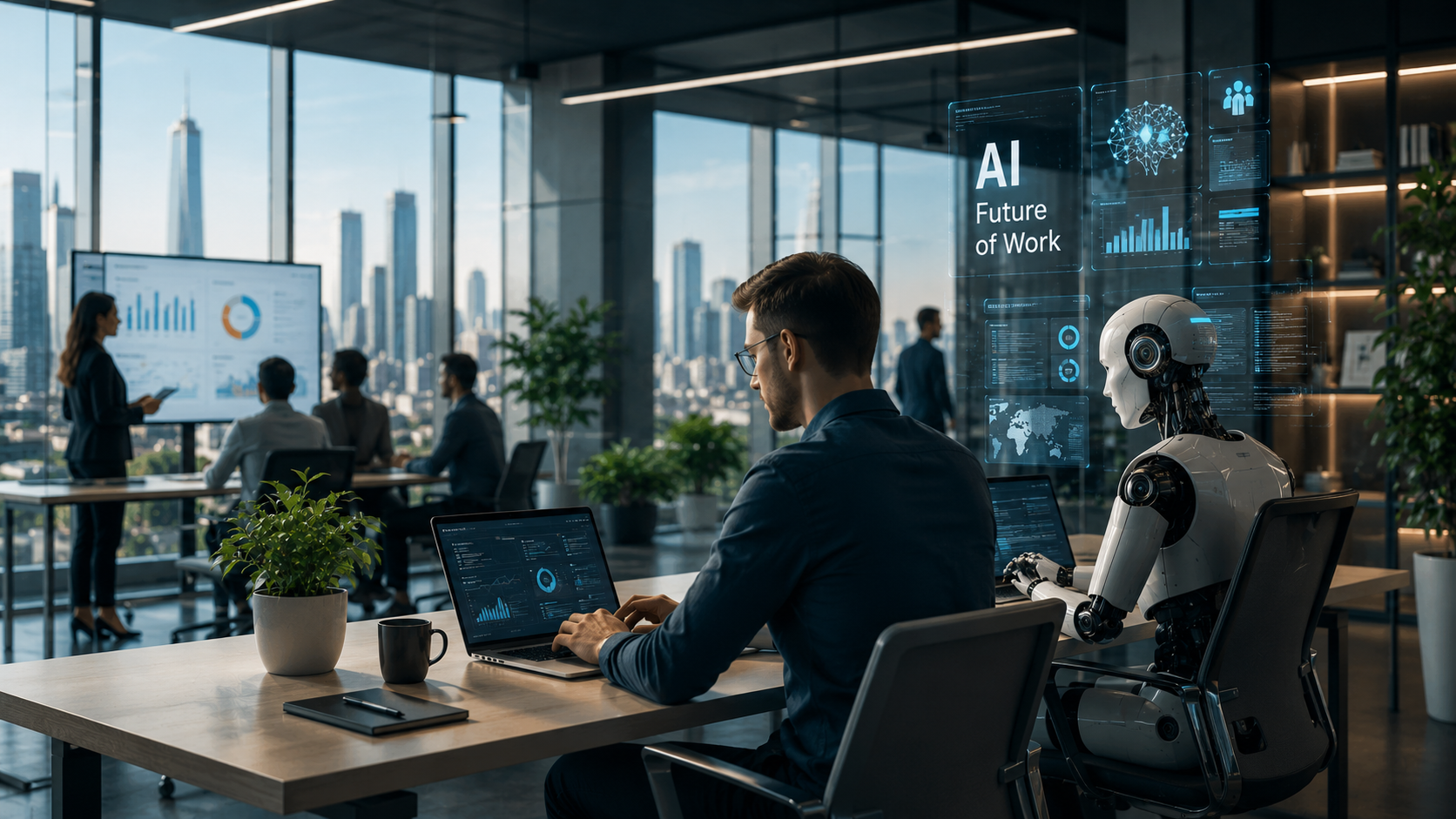
Explore how AI Future of Work is transforming industries through automation, workforce development, productivity, and digital innovation.
Artificial Intelligence and the Future of Work
Artificial intelligence is transforming the modern workplace faster than ever before. Businesses across industries are adopting AI-powered technologies to automate routine tasks, improve decision-making, and increase productivity. Rather than simply replacing jobs, the AI Future of Work is creating new opportunities for collaboration between people and intelligent systems, reshaping how organizations operate and how employees contribute to business success.
Companies that prepare for this transformation will be better positioned to compete in an increasingly digital economy.
AI Is Automating Routine Tasks
One of the biggest changes in the AI Future of Work is the automation of repetitive activities. Businesses now use AI to process documents, schedule appointments, answer customer inquiries, manage inventory, and generate reports.
By reducing the time spent on routine work, employees can focus on creative thinking, strategic planning, and solving complex business challenges.
Human Skills Become More Valuable
As AI handles repetitive tasks, uniquely human abilities become increasingly important. Skills such as creativity, leadership, emotional intelligence, communication, negotiation, and critical thinking remain difficult for machines to replicate.
Organizations are placing greater emphasis on these capabilities while integrating AI into daily operations.
Smarter Decision-Making
Artificial intelligence helps businesses analyze large amounts of information in real time. AI-powered analytics identify trends, forecast demand, evaluate risks, and provide recommendations that support faster and more informed decision-making.
Leaders can use these insights to improve planning, optimize operations, and respond quickly to changing market conditions.
Increased Workplace Productivity
AI-powered tools help employees complete tasks more efficiently by reducing manual work and improving workflow automation. Intelligent software assists with project management, data analysis, content creation, customer support, and administrative processes.
Improved productivity allows businesses to serve customers more effectively while reducing operational costs.
Continuous Learning and Upskilling
The AI Future of Work requires employees to continuously develop new skills. Businesses are investing in training programs focused on artificial intelligence, digital technologies, data analysis, cybersecurity, and automation.
Lifelong learning helps employees remain competitive while preparing organizations for future technological advancements.
AI Supports Multiple Industries
Artificial intelligence is creating value across healthcare, finance, manufacturing, education, logistics, retail, and professional services. Healthcare providers use AI for diagnostics, manufacturers optimize production, retailers personalize customer experiences, and financial institutions improve fraud detection.
The broad adoption of AI continues to create new career opportunities and business models.
Hybrid Work and Digital Collaboration
AI-powered collaboration tools support remote and hybrid work by improving communication, scheduling, document management, and virtual meetings. Intelligent workplace platforms help distributed teams remain productive regardless of location.
These technologies enable businesses to operate more efficiently in flexible work environments.
Ethical AI and Responsible Innovation
As AI becomes more common, businesses are placing greater emphasis on ethical implementation. Responsible AI includes transparency, fairness, privacy protection, and accountability when developing and using intelligent systems.
Organizations that prioritize ethical AI strengthen customer trust while reducing regulatory and reputational risks.
Leadership in an AI-Driven Workplace
Business leaders play an important role in preparing employees for AI adoption. Successful organizations communicate clearly, encourage innovation, invest in workforce development, and create environments where technology supports rather than replaces people.
Strong leadership helps employees embrace change with confidence.
Preparing for the Future
Businesses should develop long-term AI strategies, strengthen digital infrastructure, encourage continuous learning, and regularly evaluate emerging technologies. Organizations that proactively embrace the AI Future of Work will be more adaptable, productive, and competitive.
Preparing today allows businesses to take full advantage of tomorrow’s opportunities.
Conclusion
The AI Future of Work is reshaping industries by improving productivity, enhancing decision-making, and transforming how businesses operate. While automation is changing many traditional tasks, it is also creating opportunities for innovation, collaboration, and workforce development. Companies that invest in employee skills, responsible AI adoption, and digital transformation will be better positioned to succeed in the evolving workplace of the future.
FAQ
1. What does AI Future of Work mean?
AI Future of Work refers to the growing influence of artificial intelligence on how people work, how businesses operate, and how jobs evolve.
2. Will artificial intelligence replace all jobs?
No. AI is expected to automate repetitive tasks while increasing demand for human skills such as creativity, leadership, communication, and problem-solving.
3. Which industries benefit most from AI?
Healthcare, finance, manufacturing, retail, logistics, education, customer service, and professional services are among the industries benefiting significantly from AI.
4. How can businesses prepare for the AI Future of Work?
Businesses should invest in employee training, adopt AI responsibly, strengthen digital infrastructure, and encourage continuous learning and innovation.
5. Why is upskilling important in the AI Future of Work?
As technology evolves, employees need new digital and technical skills to remain productive, competitive, and prepared for emerging career opportunities.
